Cyber Risk Is Complicated. Managing It Doesn’t Have to Be.
Minerva helps leaders cut through noise, focus on what matters, and move forward with confidence.
See How This Works ↓
Why Cyber Risk Feels So Complicated
Most organizations don’t struggle with cyber risk because they lack effort or intent. They struggle because traditional GRC approaches were built for checklists, not real-world decision-making.
When everything looks equally urgent, leaders are forced to guess—often without clear evidence, context, or confidence. That’s not a failure of leadership. It’s a failure of the model.
Minerva was built to give leaders a clearer starting point—so cyber risk becomes something you can understand, explain, and manage responsibly over time.
See What a Clear Starting Point Looks Like for You →
From Reactive Guesswork → Confident, Defensible Decisions
What Changes When Cyber Risk Becomes Clear—and Defensible
When cyber risk is clear, decisions stop feeling reactive.
Leaders gain a shared understanding of where risk actually lives, which issues matter most, and why certain investments deserve priority.
Instead of managing noise, organizations focus on defensible decisions—supported by evidence and explainable to boards, auditors, and regulators. That clarity is what makes responsible risk management possible—and sustainable—over time.
See How We Create This Clarity →
Step 1: Establish a Clear, Defensible Foundation
Once cyber risk becomes clear, the next step is giving that clarity a defensible foundation.
This foundation creates a shared understanding of risk across the organization—so priorities are set intentionally, decisions are explainable, and leadership can demonstrate responsible oversight.
Rather than reacting to every issue as urgent, organizations gain a structured way to understand where risk exists, what matters most, and how to move forward with confidence.
Understand Your Risk Foundation →
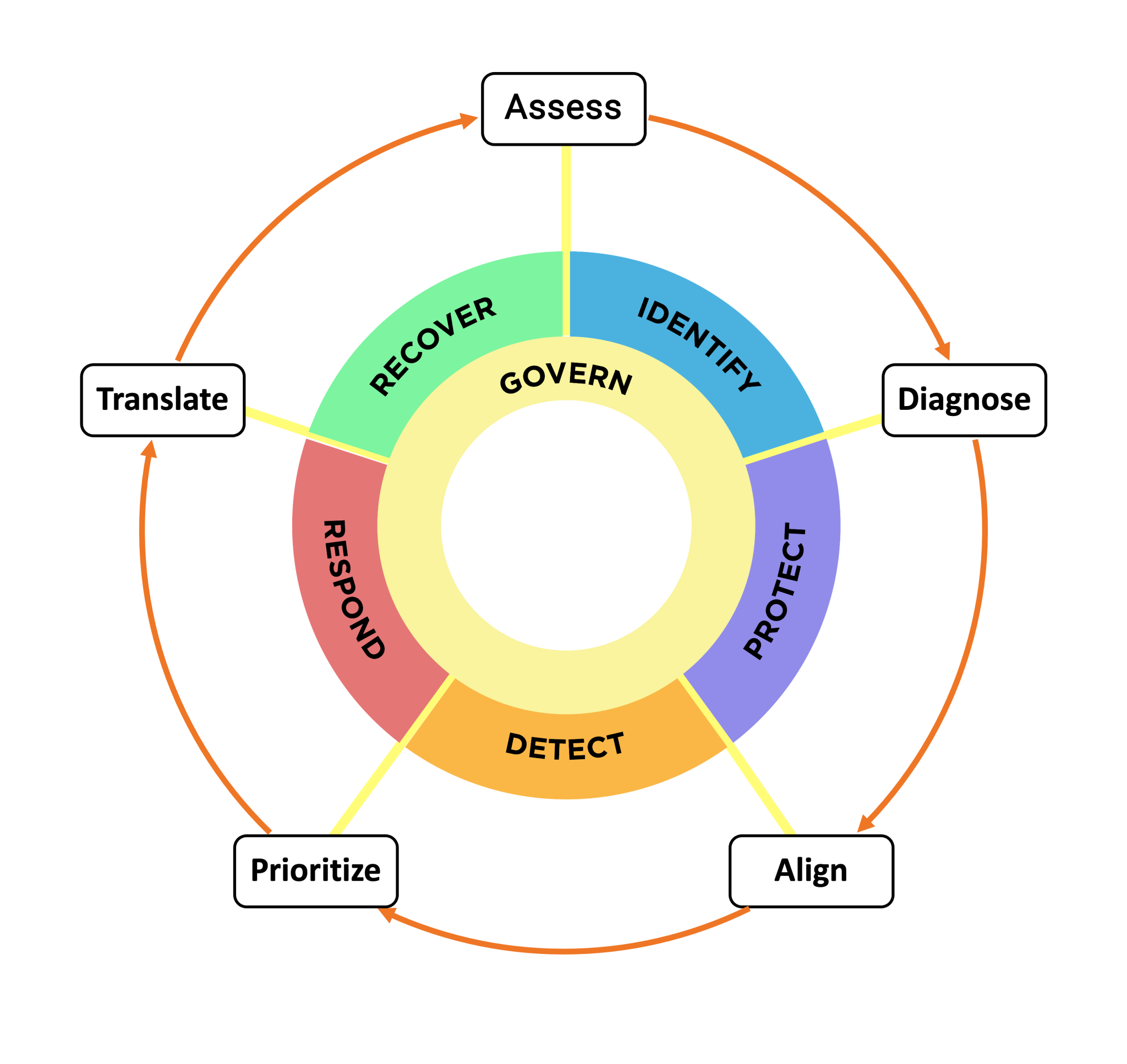
The ADAPT™ Cyber Risk Model
Frameworks are applied selectively based on sector, regulatory context, and operational reality.
Step 2: Align Controls to Real-World Risk
With a clear foundation in place, the next challenge is knowing which controls actually matter in your environment.
Generic frameworks and one-size-fits-all checklists often create unnecessary work—or worse, a false sense of security.
By aligning controls to real operational conditions, organizations can focus on safeguards that meaningfully reduce risk, support defensible decisions, and reflect how the business actually operates.
This alignment turns frameworks into practical tools—rather than abstract requirements.
Learn How Controls Are Tailored to Your Organization →
Step 3: Understand Your Cyber Posture
Once controls are aligned to real-world risk, leaders need a clear way to understand how well those controls are performing in practice.
Establishing a maturity baseline provides objective visibility into strengths, gaps, and progress over time—without assigning blame or fault.
This visibility enables leadership to demonstrate due care, informed decision-making, and responsible oversight, while directing investments toward the initiatives that deliver the greatest risk reduction and business impact.
See Your Cyber Posture →
No grades. Just clarity.
Built on a patented risk management methodology designed to support defensible, real-world decisions.
Step 4: Diagnose the Conditions Driving Your Business Risk
Once leaders understand their cyber posture, the next step is identifying the underlying conditions that are contributing to risk.
This diagnosis goes beyond surface-level findings to reveal how technology, process, resourcing, and governance factors interact—and where those conditions may increase exposure over time.
By connecting these conditions directly to business impact, leadership gains the context needed to make informed, responsible decisions that reduce risk proactively rather than reactively.
Know What’s Driving Your Risk →
Step 5: Align Priorities, Resources, and Accountability
Once the drivers of risk are understood, leaders need a clear way to align priorities with available resources and accountability.
This alignment ensures that attention and investment are focused on the initiatives that matter most—without overextending teams or diluting impact.
By intentionally aligning work, ownership, and expectations, organizations can demonstrate responsible governance, justify decisions to stakeholders, and move forward with confidence that effort is being applied where it delivers the greatest value.
Gain Clarity on How Priorities Are Set →
Designed to support responsible governance.
Built for sustainability—not urgency.
Step 6: Prioritize the Path to Risk Reduction
With priorities aligned and accountability established, the next step is determining the most effective path to reduce risk over time.
Prioritization ensures that actions are sequenced based on impact, feasibility, and organizational readiness—rather than urgency or noise.
This approach allows leadership to focus effort where it delivers the greatest risk reduction, while maintaining balance across people, process, and technology.
Gain Clarity on What Comes First →
Step 7: Translate Priorities Into Supported Action
With priorities clearly defined and sequenced, the final step is translating direction into action leadership can support.
This translation connects strategic intent to practical execution—ensuring initiatives are appropriately scoped, resourced, and understood across the organization.
By moving forward with clarity and support, organizations can make steady progress, maintain accountability, and sustain risk reduction over time without unnecessary disruption.
Sustainable Risk Governance—Without the Cost Barrier
For many organizations, effective Governance, Risk and Compliance (GRC) has been difficult to sustain—not because the risk isn’t real, but because traditional approaches rely heavily on high-cost solutions.
Minerva was built to change that model. By transforming proven expertise into a scalable platform, organizations gain sustainable, enterprise-level risk governance without the costs that typically limit long-term effectiveness.
The result is a program that remains rigorous, defensible, and accountable—while aligning with the financial realities leaders are responsible for managing.
We built Minerva to deliver greater capability, stronger outcomes, and better economics—without compromising the standard of care leaders are expected to uphold.
If you’re evaluating alternatives, we’re confident Minerva will stand up to comparison.
Have any questions?
Contact us!
Give us a call or drop by anytime; we endeavor to answer all inquiries within 24 hours on business days.
Common Questions Include:
What is the best framework for my organization?
What is the difference between compliance and negligence (you might be surprised)?
What regulatory requirements are required for our organization?
How do we start to build a formal GRC capability in our organization?
Is this an “EASY” button for GRC?
Let's get in touch
Give us a call or drop by anytime, we endeavour to answer all enquiries within 24 hours on business days.